Skin care
Dark spots and melasma: your options in Elizabeth, NJ
Sun spots, marks left by acne and melasma have different causes, and each one needs its own plan. Daily sunscreen helps all three.
Elizabeth, New Jersey
Location
134 Division St, Suite 1, Elizabeth, NJ 07201
By appointment only
We see clients from Elizabeth and from across North and Central New Jersey and New York: Newark, Jersey City, Paterson, Plainfield, Perth Amboy, New Brunswick, Freehold and Staten Island.
Get directionsThree kinds of dark spots
Three common kinds of dark spots on the face can look alike, and some people have more than one.
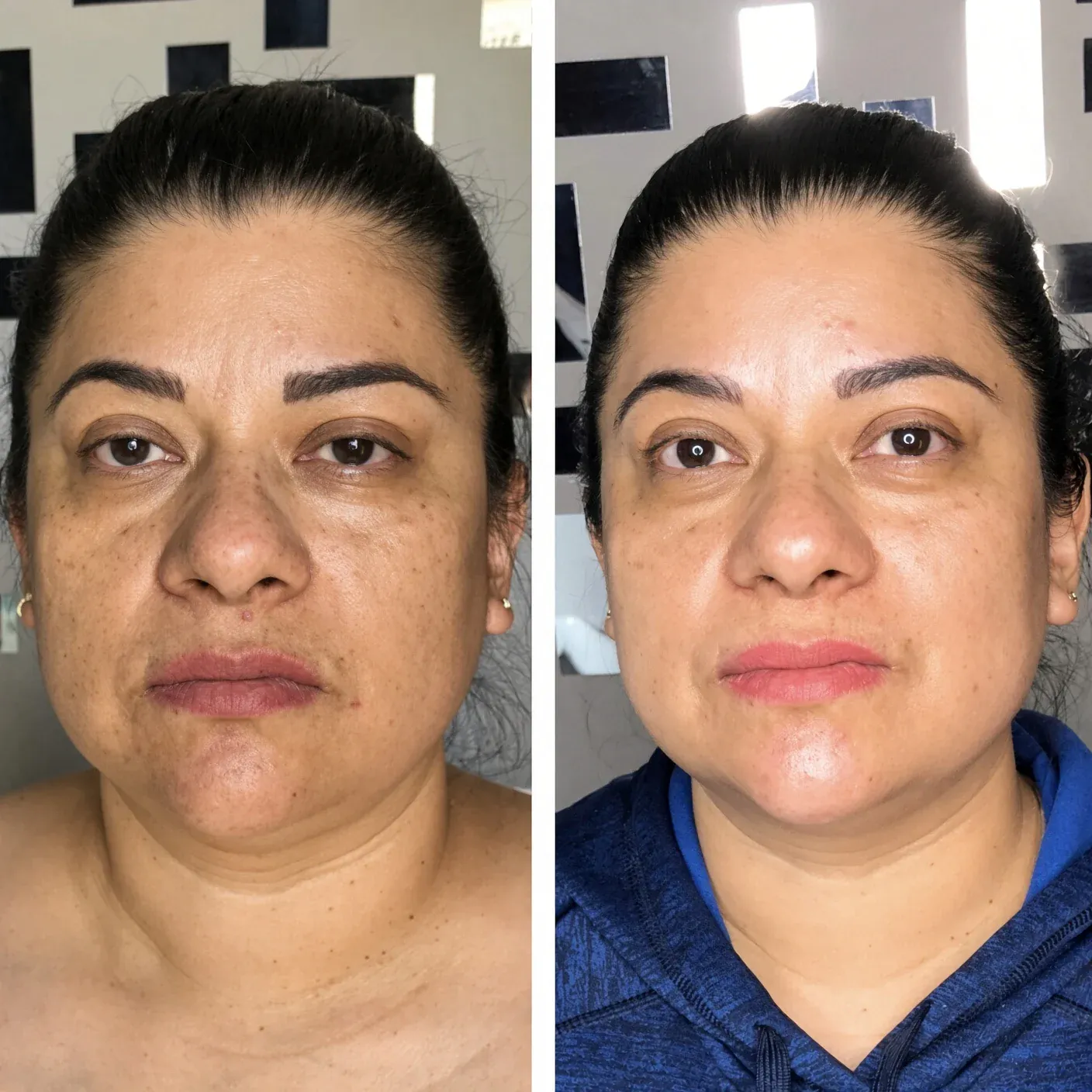
- Sun spots. Flat, tan to dark brown spots with clear edges where the sun hits most: the cheeks, nose, forehead and hands. They build up over years of sun and, unlike freckles, do not fade in winter.
- Marks left by acne. Brown or dark marks exactly where pimples were, called post-inflammatory hyperpigmentation. They are more common and last longer in darker skin, and they usually fade within 6 to 12 months once the acne is under control. They are a change in color, not in texture: sunken acne scars are a different problem.
- Melasma. Larger, blotchy brown or gray-brown patches, usually on both cheeks, the forehead, the nose or above the upper lip. Sun, visible light and hormonal changes, such as pregnancy or birth control pills, can trigger it, heat may make it worse, and it often runs in families. It is more common in medium and darker skin and in Latina women.
Esthetician or dermatologist
At Studio B we look at your skin, tell you when to see a dermatologist first and suggest a plan for marks left by acne and uneven tone. We do not diagnose melasma or other skin conditions, and we do not prescribe creams. A dermatologist confirms melasma, rules out skin cancer and can prescribe treatments such as hydroquinone or tranexamic acid.
If you have melasma, start with a dermatologist’s diagnosis; our treatments can then be one part of their plan, together with daily sunscreen.
Spots a dermatologist should see first
A spot or mark that changes should be checked by a dermatologist first. See one before any treatment if a spot:
- is new or looks different from your other spots;
- grows, or changes shape or color;
- has an irregular border or several colors;
- is black, itches or bleeds.
Some skin cancers can look like a sun spot or melasma at first.
Daily sunscreen
Sun protection is the base of every plan for dark spots; without it, spots tend to come back. Use a broad-spectrum sunscreen with SPF 30 or higher every day. A tinted one with iron oxide also protects against visible light, which can darken melasma. Reapply it every two hours when you are outdoors, and wear a wide-brimmed hat.
Avoid imported or unlabeled lightening creams: some contain mercury or hydroquinone without a prescription.
Melasma that comes back
Melasma can be kept under control, but it tends to come back with sun, heat or hormonal changes, and many people see it darker in summer. Treatment can lighten the patches but does not change the skin’s tendency to make them. Daily sunscreen and a maintenance plan help keep them lighter. Spots fade over months, not weeks, and results vary from person to person.
Treatments at Studio B
- Deep-cleansing facials. Our starting point for acne-prone skin: they clear pores and calm breakouts, which helps prevent new marks; once breakouts are under control, existing marks usually fade over months with daily sunscreen.
- Microneedling. It can help even out brown marks left by acne and improve texture over a series of sessions. For melasma, it helps only as part of a plan with daily sunscreen and the creams a dermatologist recommends, and in some skin it can make melasma worse.
In darker skin, irritation alone can leave dark marks, so we adjust each treatment and its aftercare to your skin. At your consultation we tell you which option suits your spots.
Questions about dark spots and melasma
Can an esthetician help with dark spots?
Yes, with marks left by acne and uneven tone, through facials, microneedling and a sun protection plan. Diagnosing melasma or a spot that changes, and prescribing creams, is a dermatologist's work.
Is it melasma or sun spots?
Sun spots are separate, well-defined spots where the sun hits most. Melasma forms larger, blotchy patches, usually on both sides of the face, that darken in summer and with hormonal changes. A dermatologist confirms which one you have.
Does melasma go away?
It can lighten, and it may fade on its own after a pregnancy or after stopping birth control pills. It often comes back with sun, heat or hormonal changes, so daily sunscreen stays part of the plan.
How long do marks left by acne take to fade?
Usually 6 to 12 months once the acne is under control; very dark marks can take longer. Treatment and daily sunscreen can help them fade sooner.
Can microneedling make melasma worse?
It can, in some skin. For melasma, it should only be one part of a plan with daily sunscreen and the creams a dermatologist recommends. For marks left by acne, we adjust the depth and the aftercare to your skin.
I'm pregnant and have melasma. What can I do?
Melasma is common in pregnancy and often fades after the baby is born. Wear sunscreen and a wide-brimmed hat every day, and check with your doctor before using any cream or treatment. We do not do microneedling during pregnancy.